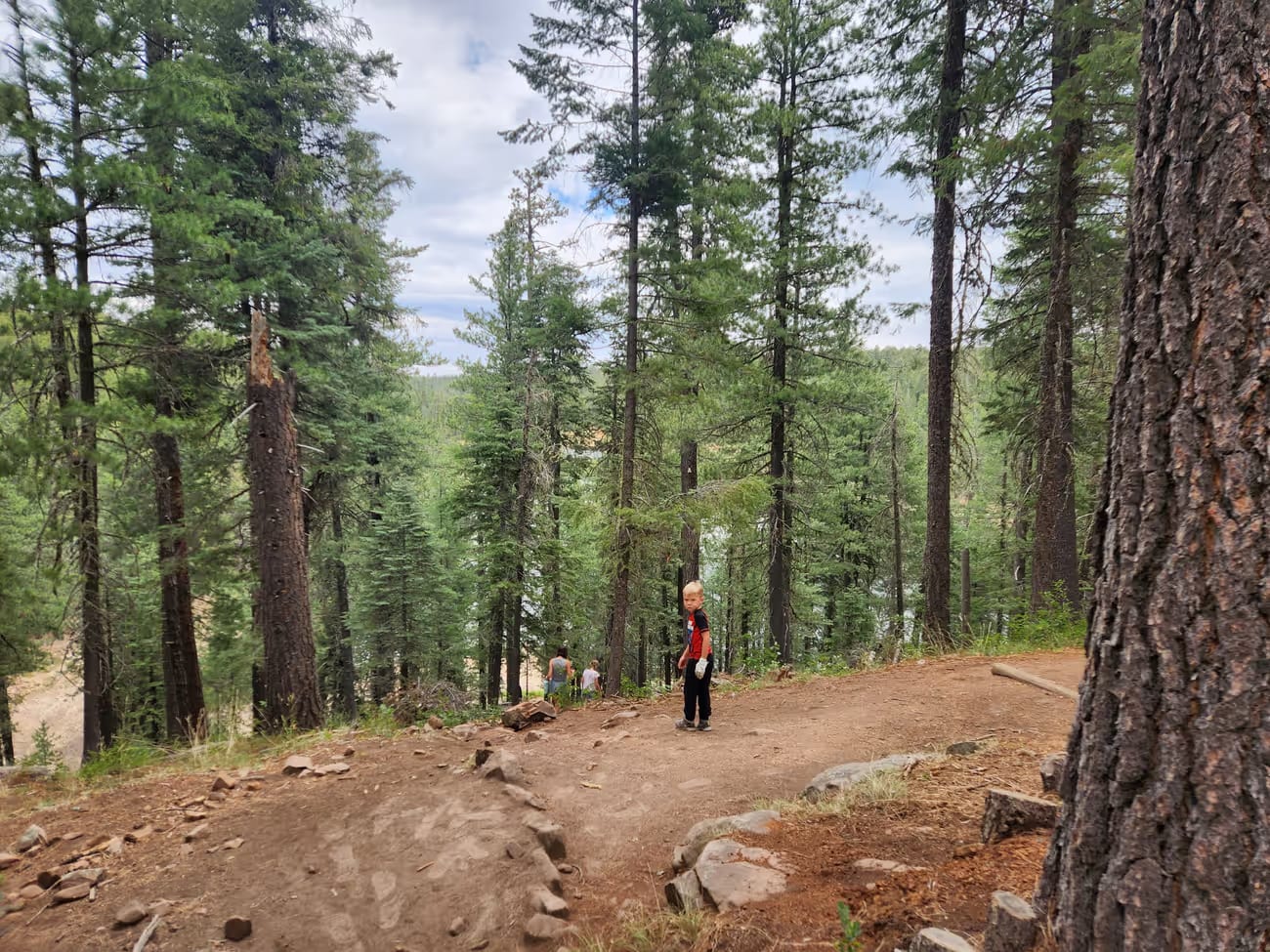
A pine-forest trail near Woods Canyon Lake. Even on a shaded Rim Country hike, families should carry water, watch the weather and agree on a turnaround plan. Health & Travels photo.
Printable Arizona family hike checklist
Check each item before leaving. You can mark the boxes on screen, then print the completed sheet or save it as a PDF.
Trip and conditions
Water, food and clothing
Navigation and emergencies
Your browser’s print window includes a “Save as PDF” option on most phones and computers.
1. Choose the hike for your least-experienced hiker
A trail that feels easy to an adult can be a major effort for a five-year-old. Before leaving home, check the total distance, elevation gain, surface, exposure, shade and distance from help. Treat an unfamiliar route as harder than its mileage suggests. Loose rock, sand, scrambling and repeated short climbs all slow a family down.
For a first visit, choose a route with an easy turnaround point instead of a hike that only feels rewarding at the summit. A creek crossing, overlook, nature loop or picnic area can give children a clear destination without forcing the family into an all-or-nothing day.
2. Check conditions—not just the temperature
Arizona conditions can change sharply by elevation and time of day. Look at the hourly forecast for the trail area, not only the nearest large city. Check heat, wind, air quality, thunderstorm risk and recent rain. During monsoon season, runoff can reach a wash even when the storm is miles away.
- Start early enough to finish before the hottest part of the day.
- Avoid exposed desert hikes during excessive-heat conditions.
- Do not enter washes, slot canyons or flood-prone areas when storms are possible.
- At higher elevations, carry a warm or rain layer even when Phoenix is hot.
- Check the land manager’s page for closures, fire restrictions and alerts.
3. Build a realistic water plan
Water needs vary with age, body size, temperature, effort and medical conditions. Carry more than the group expects to drink and keep an emergency reserve. Do not rely on a seasonal stream, trailhead fountain or map symbol unless the managing agency confirms that water is currently available and safe.
Offer children frequent drink breaks instead of waiting for them to ask. Watch the whole group for headache, unusual fatigue, dizziness, nausea, irritability, confusion or a sudden drop in coordination. Heat illness can progress quickly. Stop, seek shade and cool the person; call emergency services for severe symptoms, confusion, collapse or any condition that is rapidly worsening.
4. Pack for the delay you did not plan
- Water plus an emergency reserve
- Familiar snacks with carbohydrates and some salt
- Sun hat, sunglasses and sunscreen
- Simple first-aid supplies and personal medications
- Fully charged phone and a portable battery
- Downloaded offline map or printed route
- Small flashlight or headlamp for each adult
- Weather layer appropriate for the elevation
- Whistle and identification/contact information for children
- Trash bag and an extra bag for wet or dirty clothing
Tell someone who is not hiking with you where you are going, where the car will be parked and when you expect to return. Include the exact trailhead and route. If the plan changes, update that person before cellular service disappears.
5. Use a child-friendly pace
Begin slower than feels necessary. Early excitement often causes children to sprint, overheat and burn through energy before the return trip. Short, predictable pauses work better than waiting for a meltdown. Try a brief water check at every major trail junction or every 20 to 30 minutes, adjusting for heat and the group.
Keep children within sight and close enough for immediate direction near cliffs, water, cactus, wildlife and busy multi-use trails. Teach them to stop at every junction and never run ahead beyond the next agreed landmark.
6. Make turning around a successful decision
Turn around when water is running low, the weather changes, the route is unclear, someone is struggling or the group has used roughly half of the available time and energy. The return often feels longer because children are tired and the day is warmer.
A turnaround is not a failed hike. It is good outdoor judgment. Praise the family for noticing the conditions and making a safe choice. That lesson is more valuable than reaching a viewpoint.
7. Handle common Arizona trail hazards
Heat and sun
Favor shaded routes, shorter distances and cooler elevations when temperatures rise. Light clothing and a hat help, but they do not make extreme heat safe. If the day is hotter than planned, choose an indoor activity, splash area or another lower-risk family outing.
Lightning and monsoon storms
Do not wait on an exposed ridge for a storm to arrive. Descend and seek a safer location early. Avoid isolated tall objects, open summits, flooded roads and moving water. Never drive or walk through a flooded crossing.
Wildlife and desert plants
Give wildlife room and never place hands or feet where you cannot see. Stay on the trail to reduce contact with cactus, snakes and fragile desert soil. Children should not approach, feed or attempt to move wildlife.
Navigation
Save the trail map before leaving service. At confusing junctions, stop and confirm the route instead of continuing in the hoped-for direction. If lost, staying together and making a calm plan is usually safer than splitting up.
8. Do a two-minute post-hike check
Before driving away, confirm that everyone is accounted for, hydrated and feeling normal. Check feet for hot spots or blisters, scan for cactus spines and ticks, and make sure no important equipment was left at the trailhead. If anyone developed concerning symptoms, do not assume the car’s air conditioning alone solves the problem—seek medical help when appropriate.
Quick checklist before locking the front door
- Trail difficulty fits the youngest or least-experienced hiker.
- Hourly weather, air quality and official alerts were checked.
- Every person has water, food, sun protection and required medication.
- The route is downloaded and a responsible person has the trip plan.
- The family has a turnaround time and agrees that turning back is always acceptable.
This guide provides general educational information and does not replace medical advice, emergency services, official land-manager guidance or an individualized assessment of your family’s abilities and health.