
The short version
Take pictures. Take your trash. Keep control of your people and pets. Give others room. Leave rocks, plants, wildlife, artifacts, and trail markers exactly as you found them. Before visiting, check the rules for that specific park or forest because leash rules, trail access, waste disposal, and permitted uses vary.
In plain English: don’t be an asshole on the trail
You do not need a complicated outdoor code. If your choice damages the land, risks another person, scares wildlife, forces everyone to hear you, or leaves somebody else to clean up after you, do something different.
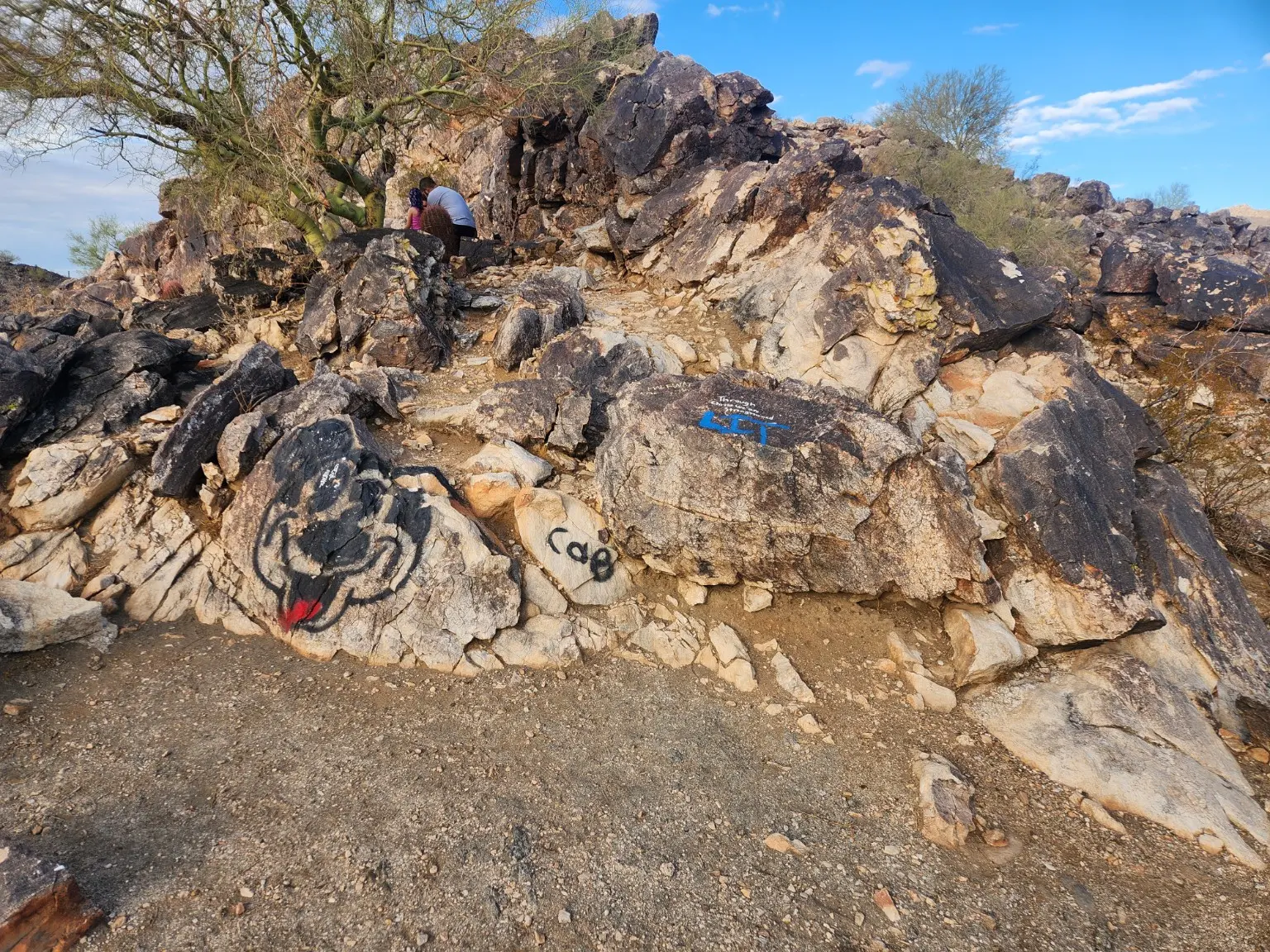
The desert is not a blank wall
Painting, scratching, carving, or writing on a rock is vandalism—not a memory. The National Park Service explains that graffiti removal can require brushes, chemicals, grinders, or even sledgehammers, and the rock may remain discolored afterward. It is especially serious around petroglyphs, archaeological sites, and historic structures.
If you find graffiti, do not try to clean it yourself. Solvents, scrubbing, painting over it, or chipping the surface can make the damage worse. Take a photo without touching the site, save the location, and report it to the responsible park, forest, city, or land manager.
Eight ways not to be that hiker
The family version: leave it better without rearranging it
Kids copy the trail behavior they see. Give them three jobs: spot tiny trash, greet people you pass, and protect every living thing by looking without touching. Carry a small trash bag, but do not ask children to pick up sharp, contaminated, or unknown objects.
Our family rule: nobody should be able to tell we were here—except that we may have carried out a safe piece of litter.
Parking lots, viewpoints, and photo stops count too
- Park only in legal spaces; do not crush roadside vegetation or block emergency access.
- Make room after taking your photo instead of occupying the viewpoint for a full production.
- Keep the group together without blocking the trail.
- Let faster hikers pass when there is a safe, durable place to do it.
- Obey closures, barriers, permits, and posted use restrictions—even when social media shows somebody ignoring them.
What to do when somebody else behaves badly
Protect your family first. Do not turn trail etiquette into a confrontation. If the behavior is dangerous, destructive, or illegal, document it only from a safe distance and report the time, location, description, and any photo to the land manager or ranger. Call 911 for an immediate threat to life or safety.
Official guidance
- National Park Service: Make Memories & Leave No Trace
- National Park Service: Leave No Trace principles
- Prescott National Forest: trails and multiple-use etiquette
- U.S. Forest Service: sharing multi-use trails
Put the rules into a 60-second pre-hike conversation with Sage’s Trail Etiquette Checklist.